Bedding Guide
What to Know Before Choosing Naturepedic Organic Flax Sheets
Linen has a way of making a bed feel both casually inviting and carefully considered. But before choosing organic flax sheets, it helps to look past the appealing rumpled texture and understand the details that shape everyday comfort: fiber sourcing, fabric weight, weave, mattress fit, set contents and laundry care.
Naturepedic’s organic linen sheets bring several of those considerations together in a clearly described set. They’re made with GOTS-certified organic flax grown in France, woven into linen, and produced in a GOTS-certified facility in India. The stated fabric weight is 185 grams per square meter, and the set includes a flat sheet, fitted sheet and two pillowcases. Here’s what those details can tell you—and what to check against your own preferences before deciding.
Start with the fiber: flax becomes linen
Linen is made from flax, a plant whose stalks contain fibers that can be separated, spun into yarn and woven into fabric. “Organic flax” describes how the crop is grown under organic production requirements; it does not, by itself, explain every step between harvest and finished sheet. For a more complete picture, look for information about the fiber’s origin, where the fabric is woven and what certifications apply to the finished product.
For the Naturepedic sheets described here, the flax is grown in France and the fabric is made in a GOTS-certified facility in India. That distinction is useful: the place where flax is cultivated and the place where a textile is manufactured are not necessarily the same. Knowing both gives shoppers a more specific view of the product’s supply chain than a broad label such as “European linen” would provide.
Flax linen has a recognizable hand. The yarn and weave can leave subtle irregularities in the surface, sometimes called slubs, as well as a texture that feels more tactile than many smooth cotton sheets. That character is part of linen’s appeal, but it is also a matter of personal taste. Anyone who prefers a sleek, uniform surface may want to consider how they feel about a more visibly textured fabric.
It is also worth separating fiber facts from broad promises. Linen is commonly valued for its breathability and ability to manage moisture, but how a sheet feels depends on more than the word “linen.” Weave, fabric weight, finishing, bedroom temperature and personal sleep preferences all contribute. The most useful approach is to treat each specification as one piece of the comfort picture rather than a guarantee of a particular night’s sleep.
What GOTS certification tells you
GOTS stands for the Global Organic Textile Standard. It is a certification system for organic textiles that addresses requirements across processing, including environmental and social criteria. When a product is identified as GOTS certified, check the wording and documentation associated with the specific item if certification is an important part of your decision. A company’s general sustainability language is not the same thing as a verified certification claim.
For these sheets, the product information identifies the fabric as GOTS-certified organic flax linen and says the sheets are made in a GOTS-certified facility. Those details offer more context than simply seeing the word “organic” in a product name. Still, a certification does not tell you whether the fabric will feel crisp or soft to you, whether the fitted sheet will suit your mattress, or how quickly the textile will develop the relaxed look associated with linen. Those questions require attention to the construction and care information too.
Consider your own priorities. If you are seeking a natural-fiber sheet with a documented organic certification, the stated GOTS details may be significant. If your main concern is texture, fit or laundering convenience, make sure to weigh those practical issues just as carefully. A responsible choice is one that aligns with your values and works in your home—not one based on a label alone.
Fabric weight: a useful clue, not a comfort score
Naturepedic lists the fabric at 185 gsm, or grams per square meter. This measurement describes the mass of a given area of fabric. It can help shoppers compare textiles when specifications are available, but it does not measure softness, durability or quality on its own. Yarn characteristics, weave density, finishing and the way the fabric is laundered also influence the finished hand.
A sheet at this weight may feel more substantial than a very light fabric, while still being described as breathable. But “weighty” and “breathable” are not contradictory: the first describes how much material is present by area, while the second relates to how air and moisture move through the textile. Individual sensations vary, and a person accustomed to fine, smooth cotton may experience linen differently from someone who already enjoys textured natural fabrics.
Use the gsm figure as a reference point rather than a verdict. If you are comparing products, look for weights in the same unit and confirm that the figures refer to comparable fabric. A listed number can provide useful context, but it cannot replace a clear return policy or, when available, an opportunity to feel a fabric sample.
Weave and finish shape the lived-in feel
Fiber content tells you what the sheet is made from; weave and finish help explain how it behaves. A looser weave may allow more air to pass through, while a tighter construction can create a different drape and surface. Finishing treatments can also change a fabric’s initial hand. Naturepedic describes its sheets as stone-washed, a process associated with a softer, more relaxed feel than an untreated fabric might have straight out of the package.
In use, linen is often appreciated for a surface that softens over time. That gradual change can be appealing if you enjoy bedding that becomes more familiar with washing. It may be less appealing if you expect a perfectly smooth finish to remain unchanged or prefer a crisp, freshly pressed look. Linen’s natural texture is not a defect to be corrected; it is part of the material’s visual and tactile character.
It is sensible to expect variation in the surface rather than a completely uniform appearance. Keep product descriptions in perspective: words such as “luxurious,” “cooling” or “exceptionally soft” are subjective. Think about fabrics you already like, the climate in your bedroom and whether you prefer a relaxed or tailored bed. Those everyday preferences can be more helpful than general adjectives.
Breathability and temperature: what to expect
Linen is often chosen by people who want a sheet with a breathable, natural-fiber feel. The product information describes the Naturepedic sheets as moisture-wicking and suitable for year-round comfort, with linen’s structure allowing air and water circulation. That can be an appealing combination for sleepers who dislike bedding that feels clammy or overly warm.
Still, no sheet can control the entire sleep environment. Mattress materials, blankets, room temperature, humidity and individual physiology all affect how warm or cool someone feels at night. Linen should not be treated as a substitute for adjusting bedding layers or room conditions. If you tend to sleep warm, you might pair breathable sheets with a lighter duvet in warmer months; if you prefer extra coziness, additional layers can make the bed feel more insulating.
Think of “temperature regulating” as a description of how a fiber can interact with air and moisture, not a promise that every sleeper will feel the same way in every season. A sheet that feels comfortably airy to one person may feel textured or substantial to another. Your best guide is your own response to linen and the practical details of your bedroom.
Check mattress fit before choosing a size
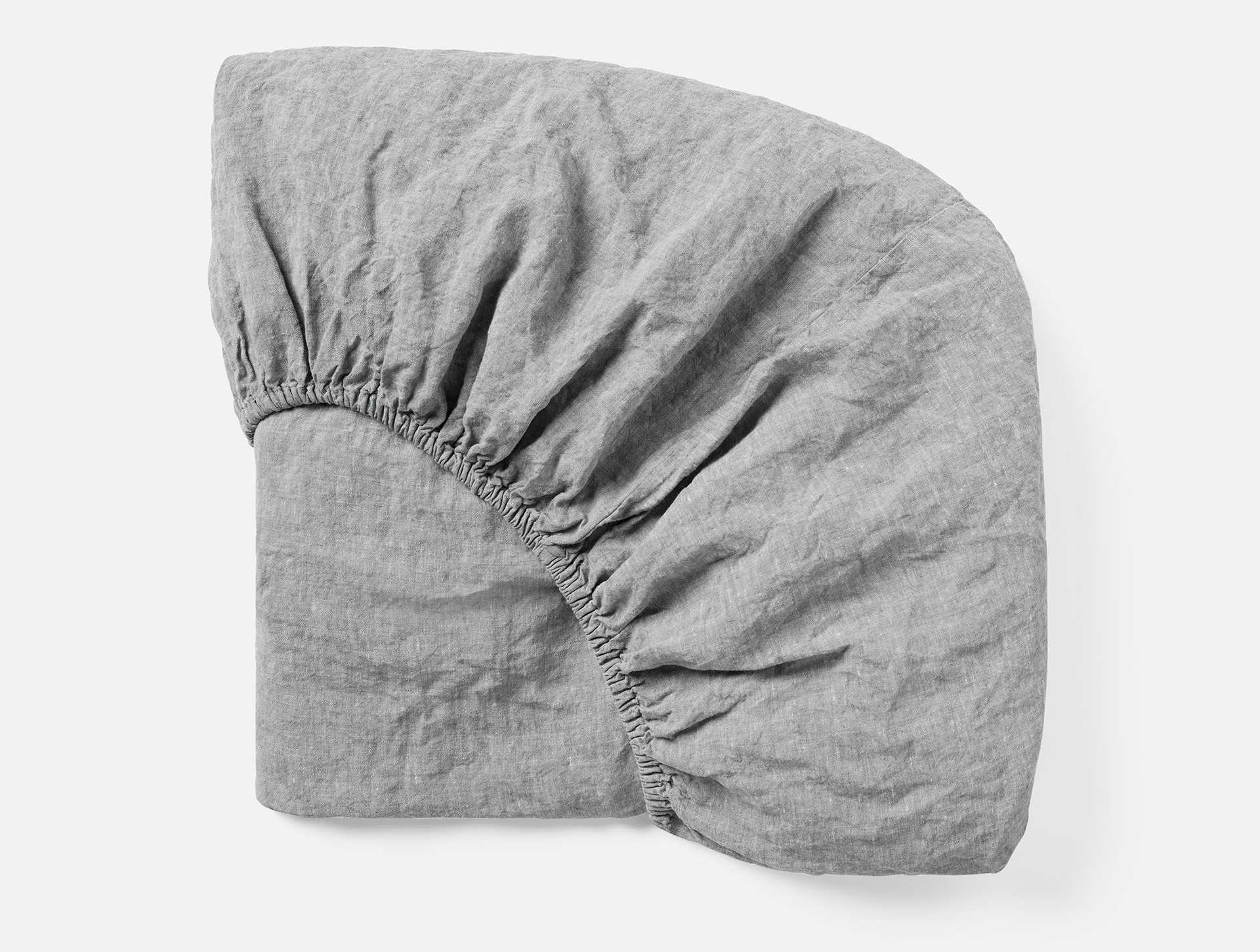
The Naturepedic set is listed in Queen, King and California King sizes. The fitted sheet has a 15-inch pocket, which is an important specification to compare with your mattress. Measure the mattress depth from its bottom edge to the top surface, including any topper you plan to leave in place. Then compare that measurement with the fitted-sheet pocket information and any guidance provided by the seller.
A deep pocket does not automatically guarantee a secure fit. Mattress shape, topper thickness, elastic construction and how much fabric is needed to tuck beneath the mattress all matter. If your mattress is close to the stated pocket depth, verify the manufacturer’s fit guidance before ordering. This is particularly worthwhile for tall mattresses or beds with a substantial topper.
Size names can also conceal differences in actual dimensions between brands. Confirm that the size corresponds to your mattress and check the listing for measurements if they are available. California King is not interchangeable with standard King, and a fitted sheet that is too small may pull loose while one that is too large can bunch. A quick tape-measure check is easier than discovering a fit problem after laundering.
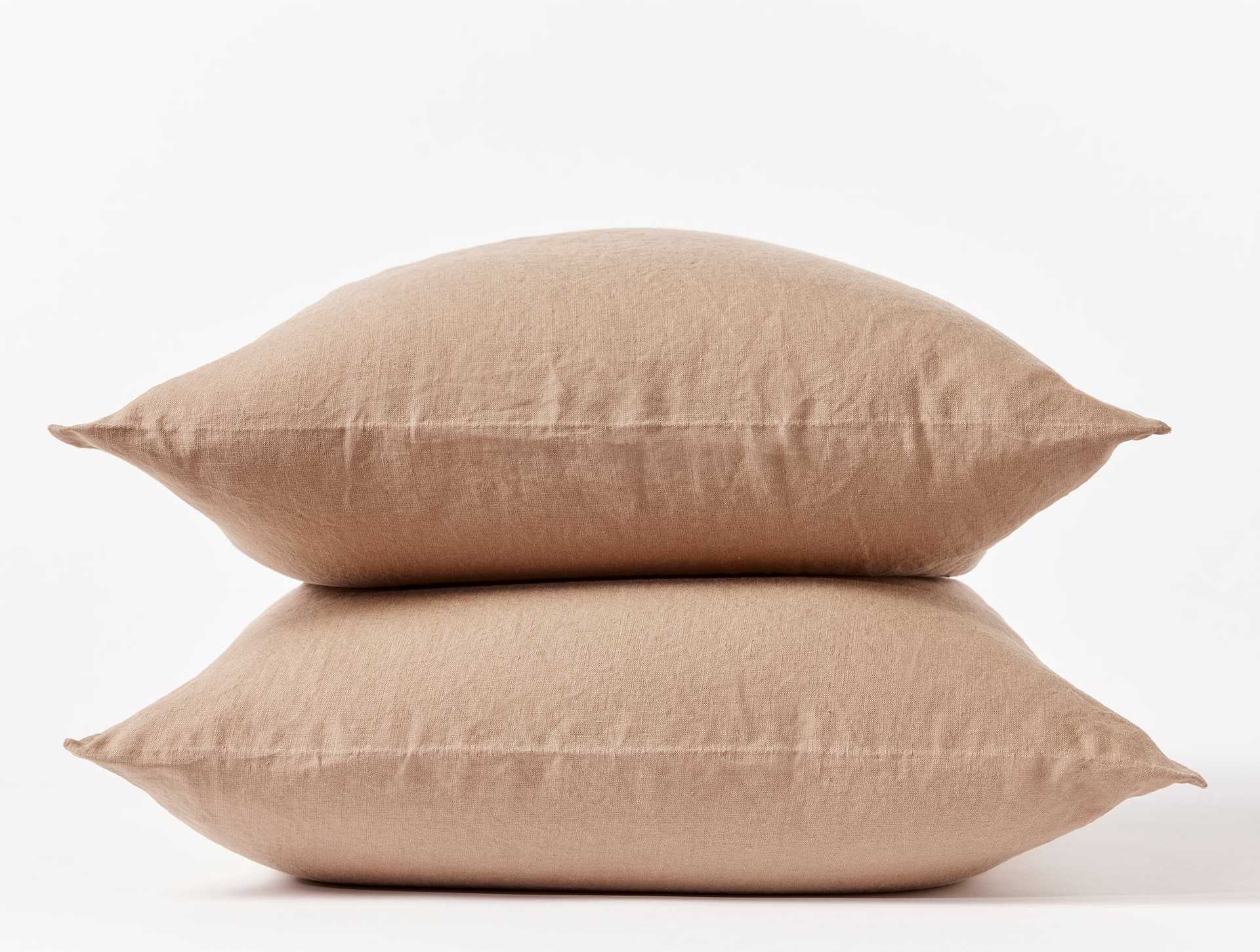
For pillowcases, the product information gives Standard/Queen and King dimensions for pillowcase pairs. Check the pillow size as well as the bed size, since a sheet set’s pillowcase configuration may not suit every pillow collection. The stated Naturepedic set includes two pillowcases, but shoppers should confirm the exact contents for the size and listing they are purchasing.
Know what comes in the set
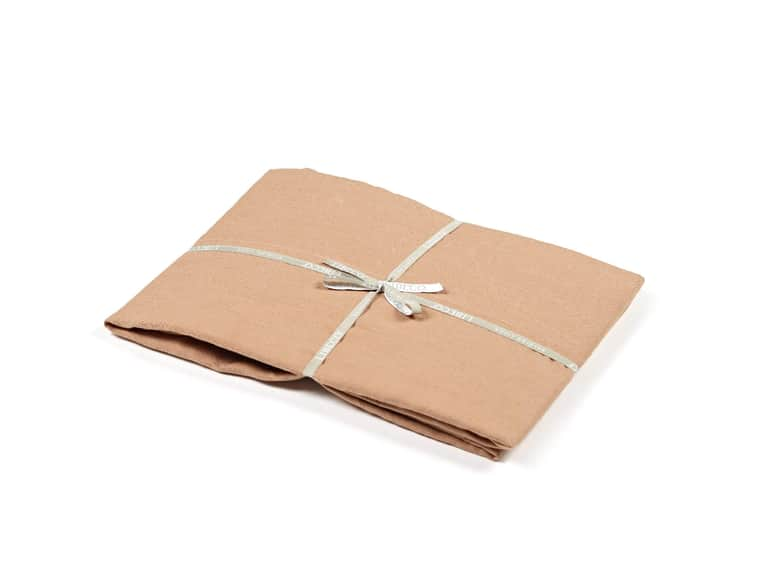
The Naturepedic organic linen sheet set includes a flat sheet, a fitted sheet and two pillowcases. That configuration covers the basic layers for many beds, but it is still worth checking the contents before checkout. Some shoppers use a flat sheet every night; others prefer a fitted sheet and duvet cover only. If you rely on extra pillowcases, decorative shams or a duvet cover, those may need to be purchased separately.
Take stock of what you already own. If you have a duvet cover and decorative cushions in a different material or color, linen sheets can still be the foundation for a layered bed. Their natural texture tends to sit comfortably alongside smoother cotton, quilted covers and knitted throws. A coordinated bedroom does not require every layer to come from one collection.
Also consider whether you are replacing a full set or refreshing one piece at a time. A fitted sheet can be a practical first step if you want to test linen without changing every bed layer. On the other hand, a complete set creates a consistent surface and makes it easier to assess how the fabric feels as a group.
Laundry care: match the instructions to your routine
For the Naturepedic sheets, the listed care guidance is machine wash warm, tumble dry low and warm iron if desired; bleach is not recommended. Before the first wash, check the current label that comes with the product, because the sewn-in care instructions should take priority over a summary in an online description. If your household normally uses hot cycles or high dryer heat, decide whether you are comfortable adjusting that routine.
Gentler laundering can help preserve the fabric’s appearance and reduce unnecessary wear. Avoid overloading the washer so sheets can move freely, and remove them promptly after drying to limit deep creases. Linen naturally relaxes and wrinkles; ironing is optional if you like a smoother finish. If you prefer a casually rumpled bed, there is no need to chase a perfectly pressed look.
Color care matters too. Washing similar colors together can help reduce the chance of dye transfer, especially with new or darker bedding. Use detergent according to its directions and avoid bleach when the product care instructions say not to use it. Overly aggressive washing and drying can be hard on textiles regardless of fiber, so a routine that is consistent with the label is a sensible starting point.
Think about drying space before choosing any sheet set. Line drying can reduce use of a dryer, but it takes room and time; low-heat tumble drying may be more practical for some households. The right option is the one you can follow regularly while respecting the product’s care limits. Linen is often described as durable, but sensible upkeep still matters if you want bedding to serve you well over time.
Organic linen and sustainability: read claims carefully
Flax is a renewable plant fiber, and organic certification can provide a framework for evaluating how the crop and textile processing are managed. Those are meaningful points for shoppers who want to understand material choices. At the same time, a single attribute cannot answer every sustainability question. Transport, manufacturing, dyeing, product lifespan, washing habits and eventual disposal also contribute to a textile’s broader impact.
For this sheet set, the available details name French-grown organic flax and manufacturing in a GOTS-certified facility in India. That gives a clearer account of origin and production than an unspecified “natural” claim. It does not, on its own, quantify the full environmental footprint of the finished bedding. If a particular environmental issue is central to your decision, look for specific documentation rather than relying on vague labels or assumptions.
Longevity is another practical consideration. A sheet that remains in regular use for years may offer more value to a household than one replaced frequently, but durability depends on use and care as well as construction. Buy a size that fits, follow laundering instructions and consider whether the fabric’s texture is one you will continue to enjoy. The most responsible purchase is often the one that genuinely suits your needs and is used for a long time.
A simple checklist before you buy
Before choosing Naturepedic organic flax sheets, pause for a quick check of the details that are easiest to overlook:
- Fiber and certification: Confirm that the listing identifies organic flax and GOTS certification in the way you expect.
- Origin: Note that the flax is described as grown in France and the sheets are made in a GOTS-certified facility in India.
- Weight: Use the listed 185 gsm as a comparison point, not a stand-alone measure of softness or quality.
- Texture: Decide whether you enjoy linen’s natural, relaxed surface and the possibility of visible wrinkles.
- Mattress depth: Measure your mattress and any topper, then compare the result with the 15-inch fitted-sheet pocket.
- Set contents: Confirm the flat sheet, fitted sheet and two pillowcases meet your needs and check pillowcase dimensions.
- Care routine: Make sure warm washing, low-heat drying and avoiding bleach are workable for your household.
- Room and sleep preferences: Consider climate, blankets and your own comfort rather than expecting a fabric to regulate every factor.
The bottom line
Choosing Naturepedic organic flax sheets is about more than deciding whether you like linen’s relaxed look. The listed details—French-grown GOTS-certified organic flax, a 185 gsm fabric, a 15-inch fitted-sheet pocket, a set with two pillowcases and straightforward home-care guidance—give shoppers concrete points to evaluate. They also make it easier to compare the sheets with other options based on information rather than marketing language alone.
If you value natural-fiber texture, want to understand where the flax is grown and how the finished textile is certified, and are comfortable caring for linen according to its instructions, these sheets may align with your priorities. If you prefer a sleek surface, need a different pocket depth or want a more hands-off laundry routine, take time to compare alternatives. The best bedding choice is the one that fits your mattress, your habits and the way you want your bedroom to feel—night after night.